


This article is for informational purposes only. It is not, nor is it intended to be, a substitute for professional medical advice, diagnosis, or treatment and should never be relied upon for specific medical advice.
No. Do not use boric acid suppositories while pregnant. Human pregnancy safety data are limited, and vaginal use is not considered a pregnancy-safe treatment option. If you already used one, stop using it and contact your prenatal clinician for advice about the exposure and your symptoms; an exposure does not establish that harm occurred.
TL;DR
- Can you use boric acid suppositories while pregnant? No. Avoid them and ask your prenatal clinician about treatment.
- Kushae's boric acid product carries a pregnancy warning; added probiotics or aloe do not remove that restriction.
- Vaginal odor, BV, and yeast symptoms need diagnosis during pregnancy, not repeated self-treatment.
- External vulvar care and intravaginal treatment have different purposes. A feminine wash does not treat BV.
Why this matters
Pregnancy changes which vaginal treatments are appropriate. A product you used before pregnancy is not automatically suitable now, even if it is sold without a prescription or described as natural.
The safety information for boric acid suppositories explicitly says not to use them during pregnancy. For your 2026 care decisions, make pregnancy status the first filter—not dose, added ingredients, or reviews.
You still deserve relief from odor, itching, and irritation. The next step is to identify the cause and choose a treatment with pregnancy-specific guidance, rather than leave symptoms untreated or keep trying different products.
Can you use boric acid suppositories while pregnant?
No. Avoid intravaginal boric acid throughout pregnancy, including early pregnancy. There is no established pregnancy-safe dose or trimester that makes self-treatment appropriate.
The CDC's Sexually Transmitted Infections Treatment Guidelines recommend only topical azole therapies used for 7 days for vulvovaginal candidiasis during pregnancy. The CDC's bacterial vaginosis guidance recommends treating symptomatic pregnant patients with appropriate antibiotic regimens; boric acid is not a substitute for that treatment.
These are general clinical recommendations. They are not evidence that any particular branded boric acid formula is safe or effective during pregnancy.
| Option | Best for | Main benefit | Important limit |
|---|---|---|---|
| Vaginal boric acid | Not appropriate for pregnancy self-treatment | Has a role in selected nonpregnant treatment plans | Avoid during pregnancy; never swallow |
| Clinician-directed topical azole | Pregnant patients with diagnosed vaginal yeast infection | CDC-recommended treatment category during pregnancy | Does not treat BV; the pregnancy regimen is 7 days |
| Clinician-prescribed BV antibiotic | Pregnant patients with diagnosed, symptomatic BV | Treats the diagnosed bacterial condition | Requires the right diagnosis and prescribed regimen |
| Gentle external cleansing | Routine care of external vulvar skin | Removes surface sweat and residue | Does not treat vaginal yeast infection or BV |
The table separates treatment from hygiene. You cannot exchange an external cleanser for an infection treatment, or assume that every product inserted vaginally has the same pregnancy safety profile.
Already used boric acid? Stop and call your prenatal clinician
An accidental exposure needs an individualized assessment, not a prediction from an article. Stop further doses and contact your OB/GYN, midwife, or other prenatal clinician. Do not douche or insert another product to try to remove or neutralize the suppository.
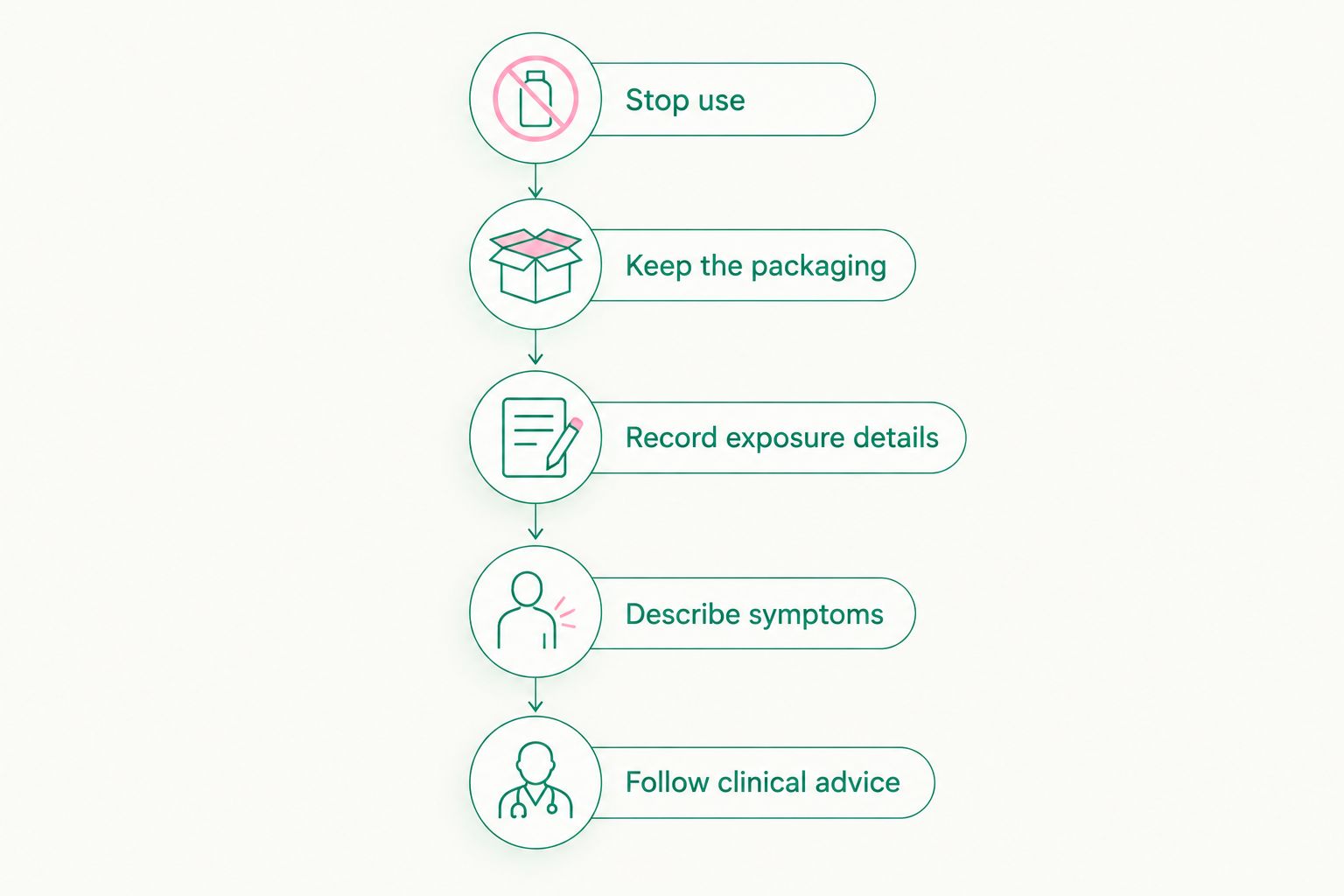
Use this sequence when you call:
- Stop use. Do not insert another boric acid suppository while waiting for advice.
- Keep the packaging. Your clinician needs the ingredient list and the amount listed on the label.
- Record exposure details. Note when you used it, how many suppositories you used, and how far along you are.
- Describe symptoms. Include odor, discharge, itching, burning, bleeding, pain, or a possible fluid leak.
- Follow clinical advice. Ask what evaluation or treatment your symptoms require and whether any exposure follow-up is needed.
Do not interpret the absence of immediate burning as proof of pregnancy safety. Local irritation and pregnancy risk are separate questions, and a clinician needs the exposure details rather than symptoms alone.
If you swallowed boric acid, contact Poison Control immediately. In the United States, call 1-800-222-1222. Boric acid suppositories are not oral medicines; do not induce vomiting unless a poison specialist tells you to.
Why pregnancy treatment advice varies
The instruction to avoid boric acid does not change because the odor is stronger or the symptoms feel familiar. What changes is the diagnosis and the appropriate alternative.
These factors shape your clinician's decision:
- The cause of symptoms. BV, yeast infection, irritation, and some sexually transmitted infections require different care.
- Pregnancy status. Tell your clinician if you are pregnant, might be pregnant, or are trying to conceive.
- Previous treatment. Share recent antibiotics, antifungals, suppositories, and whether symptoms returned after treatment.
- Symptom pattern. Discharge, odor, itching, pain, bleeding, and fluid leakage help determine the assessment you need.
- Exposure details. If you used boric acid, the label strength, timing, and number of doses matter to the exposure assessment.
- Testing results. An examination or vaginal sample helps distinguish conditions that feel similar.
For a 2026 treatment decision, bring the product label and your symptom history to the same conversation. One addresses exposure; the other addresses why you reached for treatment.
What can you use for a yeast infection during pregnancy?
The CDC recommends topical azole treatment for 7 days during pregnancy. Your prenatal clinician can confirm whether your symptoms are caused by yeast and identify the appropriate product and instructions.
Topical azoles include medicines such as clotrimazole and miconazole. Their role is to treat a fungal infection—not to deodorize skin or manage BV. Follow pregnancy-specific clinical advice rather than selecting the shortest regimen on the shelf.
The CDC advises against oral fluconazole during pregnancy. Do not replace boric acid with an oral yeast medicine from an old prescription or assume that a treatment suitable outside pregnancy is suitable now.
If treatment fails, contact your clinician rather than repeating courses indefinitely. Persistent symptoms can reflect a different diagnosis or a yeast species that needs further assessment.
What can you use for BV during pregnancy?
Symptomatic BV during pregnancy needs clinician-directed treatment, usually an appropriate antibiotic regimen. The CDC's BV guidance includes metronidazole and clindamycin options for pregnant patients, with the choice and instructions determined by the treating clinician.
A fishy odor can occur with BV, but odor alone does not confirm it. You need an assessment rather than a product selected solely because its label mentions pH balance.
Do not try to treat suspected BV with a feminine wash, deodorant spray, or a boric acid suppository. An external product cannot treat a vaginal bacterial condition, and the pregnancy restriction on boric acid still applies.
The benefit of prescribed treatment is that it targets the diagnosed condition. Its limitation is equally clear: antibiotics are not interchangeable with yeast treatments, and leftover medication is not a reliable treatment plan.
Can odor or discharge tell you whether it is yeast or BV?
No. Symptoms overlap, and an article cannot diagnose persistent vaginal symptoms. Yeast often causes itching and irritation, while BV often causes odor and discharge, but those patterns are not enough to choose treatment safely during pregnancy.
A related distinction matters when discussing vaginal yeast infections: the CDC does not usually classify uncomplicated vulvovaginal candidiasis as sexually acquired. Symptoms after sex therefore do not, by themselves, establish an STI, yeast infection, or BV.
Pregnancy can also increase normal discharge. New odor, itching, pain, or a substantial change still deserves discussion with your prenatal clinician, especially when symptoms persist or recur.
For your appointment, describe what changed rather than assigning yourself a diagnosis. Explain whether the discomfort is on the external vulvar skin, inside the vagina, or both; that distinction helps keep cleansing advice separate from infection treatment.
Does a lower dose or added probiotics make boric acid safe?
No pregnancy-safe boric acid dose has been established. Do not use a lower-strength suppository, split a product, or space out doses to create your own pregnancy regimen.
Added probiotics or aloe do not establish pregnancy safety for the complete formula. Evidence about an individual ingredient is not the same as evidence about a finished product used intravaginally during pregnancy.
This distinction applies to Kushae boric acid suppositories as well. OB/GYN-developed does not override a product's pregnancy warning, and general evidence about boric acid outside pregnancy does not establish safety during pregnancy.
In 2026, the purchasing decision remains straightforward: do not buy boric acid to self-treat vaginal symptoms while pregnant. Ask about diagnosis and pregnancy-appropriate treatment instead.
How should you care for sensitive external skin while pregnant?
Keep external vulvar care separate from vaginal treatment. The vulva is the external genital area; the vagina is the internal canal. Do not insert a cleanser, skin balm, or deodorant into the vagina.
ACOG's patient education on vulvovaginal health advises avoiding douching and products that irritate the genital area. Gentle external washing is different from trying to clean inside the vagina, which does not need douching.
If your external skin stings or burns after using a product, stop using it and discuss persistent irritation with your clinician. More washing is not the answer to every odor or itch, and adding several products at once makes it harder to identify an irritant.
Kushae vulvovaginal care is best for women seeking OB/GYN-developed care products—not a replacement for pregnancy-specific diagnosis or treatment. Product purpose and pregnancy restrictions still determine whether an individual item belongs in your routine.
For a simple 2026 care plan, start with gentle external hygiene and clinician-directed treatment when needed. Do not add deodorants or washes to conceal a new odor before discussing the underlying change.
When should you seek urgent pregnancy care?
Contact your prenatal team promptly for new or persistent vaginal symptoms. Seek urgent assessment for fever, significant pelvic or abdominal pain, vaginal bleeding, or a gush or ongoing trickle of fluid. Do not assume those symptoms are yeast or BV.
Possible fluid leakage during pregnancy needs assessment even if you have also used a suppository. A product's residue does not give you a reliable way to rule out a pregnancy-related concern.
If you cannot reach your usual clinician, follow your maternity team's urgent-care instructions. Bring the product packaging and explain any vaginal products or medicines you recently used.
FAQ
Can I use boric acid suppositories in my first trimester?
No. Avoid boric acid suppositories during the first trimester and throughout pregnancy. There is no established trimester in which pregnancy self-treatment with boric acid is considered safe.
What if I used boric acid before I knew I was pregnant?
Stop using boric acid and contact your prenatal clinician with the product label, timing, and number of doses. An exposure does not establish that harm occurred; your clinician can assess your specific situation.
Can I use boric acid while trying to get pregnant?
Do not self-start boric acid while trying to conceive. Discuss alternatives with your clinician because an early pregnancy can be unrecognized when treatment begins.
What yeast infection treatment is recommended during pregnancy?
The CDC recommends topical azole therapy for 7 days during pregnancy. Ask your prenatal clinician to confirm the diagnosis and advise on the appropriate medicine; do not substitute oral fluconazole.
Can a feminine wash treat BV while I am pregnant?
No. An external feminine wash does not treat BV inside the vagina. Symptomatic BV during pregnancy needs clinical assessment and an appropriate prescribed treatment.
Are boric acid suppositories with probiotics safe during pregnancy?
Added probiotics do not establish pregnancy safety for a boric acid suppository. Avoid the product during pregnancy, even when it also contains aloe or other ingredients.
Should I douche after accidentally using a boric acid suppository?
No. Do not douche or insert another product to try to neutralize boric acid. Stop further use and contact your prenatal clinician for exposure advice.
One last thing
The most useful item to bring to your appointment is the actual package—not just the product name. Your clinician needs to distinguish what you used, where you used it, and what symptoms prompted it.
For pregnancy care in 2026, keep that distinction clear: external skin care supports hygiene; diagnosed vaginal conditions need appropriate treatment. Boric acid does not become a pregnancy-safe option because it helped before.


