

This article is for informational purposes only. It is not, nor is it intended to be, a substitute for professional medical advice, diagnosis, or treatment and should never be relied upon for specific medical advice.
Anti-chafing balm has no universal wear time: how long it lasts depends on the formula, friction, sweating, and whether clothing or washing removes it. Use the product’s directions and changes in skin comfort—not an assumed number of hours—to decide when to reapply. A balm also does not make continued rubbing safe once skin becomes painful, raw, or broken.
TL;DR
- How long does anti-chafing balm last after you apply it? There is no universal wear time.
- Kushae Protective Feminine Skin Balm is for external chafing care, not vaginal odor or BV treatment.
- Check skin after sweating, toweling, or changing clothes; follow the balm’s reapplication directions.
- Stop rubbing painful or broken skin rather than repeatedly covering it with more balm.
How long does anti-chafing balm last after you apply it?
An anti-chafing balm lasts only as long as it maintains an effective barrier where your skin rubs. A clock cannot tell you whether that barrier remains intact. Walking, clothing contact, moisture, and wiping all affect the conditions at the application site.
For women seeking external friction care, Kushae Protective Feminine Skin Balm is an option for chafing-prone skin, not a treatment for vaginal infections. The Protective Feminine Skin Balm addresses a different concern from an intravaginal suppository. Follow its current label for permitted application areas and use instructions.
When comparing anti-chafing products in 2026, separate a stated wear-time claim from a guarantee. A duration on a label does not mean you should ignore discomfort before that time passes.
| Situation | What to check | Practical response | Limitation |
|---|---|---|---|
| Routine walking | Whether skin still moves comfortably | Continue checking comfort as activity changes | A comfortable start does not guarantee lasting protection |
| Sweaty activity | Damp clothing and renewed rubbing | Dry the area gently and follow reapplication directions | More balm cannot fix clothing that keeps rubbing |
| After washing or toweling | Whether the protective layer was removed | Reapply to clean, dry, intact skin as directed | Do not assume the original application remains |
| Painful or broken skin | Rawness, bleeding, or worsening tenderness | Stop friction and assess the injury | Prevention products are not a substitute for wound care |
Why this matters
Chafing is friction-related skin irritation. It can affect inner thighs, the groin crease, and other places where skin or fabric repeatedly rubs. The American Academy of Dermatology’s patient guidance on preventing chafing emphasizes reducing friction, managing moisture, and using protective measures.
The practical point is simple: balm is one part of prevention, not permission to keep rubbing irritated skin. If the same seam causes discomfort every time you walk, changing that contact matters more than adding another layer.
Intimate-area discomfort also needs accurate location language. The vulva is external anatomy; the vagina is the internal canal. External thigh or groin chafing is not the same problem as vaginal odor, abnormal discharge, or BV.
Why anti-chafing balm wear time varies
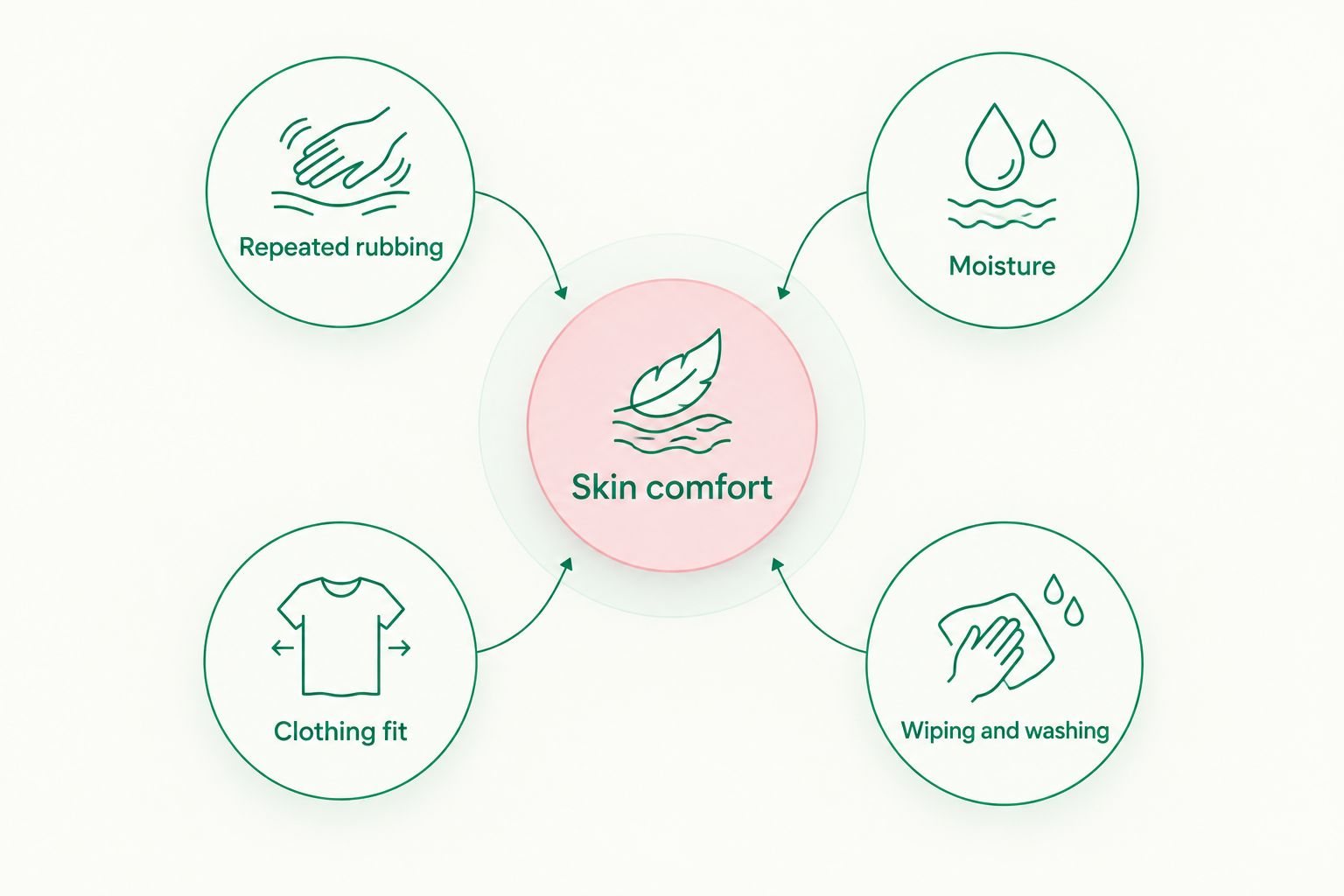
These factors explain why the same application can feel different during a quiet afternoon and a sweaty workout:
- Formula: Balms differ in ingredients and texture. Follow the individual label rather than transferring another product’s wear-time claim.
- Repeated rubbing: Skin-to-skin contact and fabric movement can disturb a protective layer. Pay attention to the exact contact point.
- Moisture: Sweat, wet swimwear, and damp underwear change the environment around your skin. Moisture management remains important even when you use balm.
- Wiping and washing: Towels, cleansing, and repeated wiping can remove product. Reassess protection afterward.
- Application area: Inner thighs and groin creases experience different combinations of movement, clothing pressure, and moisture. Do not assume they need identical care.
- Clothing fit: A tight seam or fabric that bunches can keep creating friction. Reapplication does not remove that source.
These factors work together. You might notice rubbing after changing into different underwear even though your activity level has not changed. That is a reason to inspect the fit and contact area, not proof that you need a stronger formula.
How should you apply and reassess anti-chafing balm?
Use this routine for prevention on intact external skin, within the product’s labeled directions. If the area is already injured, start by stopping the rubbing rather than treating the situation as routine prevention.
- Identify the contact point. Notice whether skin rubs against skin, an underwear edge, or a clothing seam. Addressing the wrong spot leaves the actual friction unchanged.
- Start with clean, dry skin. Gently pat the area dry. Avoid aggressive rubbing with a towel, especially when the skin already feels sensitive.
- Read the application directions. Use only the amount and application sites specified by the manufacturer. More product is not automatically more protection.
- Check clothing before moving. Smooth bunching fabric and adjust seams that press into the area. Change clothing if you cannot remove the contact point.
- Reassess when conditions change. Check after heavy sweating, washing, toweling, or a clothing change. Follow the label if another application is needed.
- Stop if symptoms worsen. Burning, increasing tenderness, or rawness calls for a pause. Do not keep exercising simply because you have reapplied balm.
For your 2026 care routine, use events as reminders rather than inventing a timer. A shower is a clear reason to reassess. So is noticing that your walking shorts have become damp and started bunching.
Avoid turning reassessment into repeated scrubbing. You are checking whether skin remains comfortable and intact, not trying to remove every trace of product before each decision. If the label does not answer your reapplication question, ask the manufacturer or a pharmacist.
Does sweating mean you need to reapply immediately?
Sweating is a reason to check the area, not an automatic instruction to add more balm. Assess the skin, clothing, and product directions together. If fabric is damp and rubbing, deal with that first.
During a workout, pause if you feel a developing hot spot. Adjust clothing, gently dry the area when practical, and decide whether continuing will keep irritating the same skin. A new application does not reverse irritation that has already started.
After activity, remove damp clothing and cleanse gently as needed. Let the skin dry before applying an external product according to its instructions. Avoid stacking several unfamiliar products on a sensitive area; doing so makes it harder to identify what caused new stinging or redness.
The same approach applies outside exercise. Long walks, commuting, and time in wet swimwear can create changing conditions. You do not need to wait for a planned application time if the skin is telling you that rubbing has become uncomfortable.
Can clothing help balm protection last?
Clothing can reduce or add to friction, so evaluate it alongside your balm. Best for reducing direct thigh contact: a comfortable garment that stays in place and covers the rubbing area. Its limitation is fit: rolling hems, pressure, and bunched fabric can create new contact points.
Fabric names alone do not answer that question. When comparing bamboo boyshorts for summer comfort, assess leg coverage, seam placement, and whether the garment stays comfortable when damp—not just the fiber named on the package.
Try the movement that normally causes trouble. Walk, sit, and bend before committing to a long outing. If the hem rides into the groin crease or the waistband changes the fit, the garment needs adjustment regardless of how soft it feels in your hand.
For summer 2026, plan around the conditions you actually expect. Carrying a change of damp clothing can address a friction source that repeated balm application leaves untouched. Neither a particular fabric nor a protective balm guarantees chafe-free wear.
What should you check before choosing a balm?
Start with the intended application area. A product for external skin is not an intravaginal product, and “intimate care” does not mean every formula belongs on every part of the vulva. Read the current label before applying anything near sensitive tissue.
Then check the full ingredient list, especially if you already know that certain ingredients irritate your skin. “Natural” does not guarantee that a formula will suit you. The American Academy of Dermatology’s patient education on contact dermatitis explains that skin reactions can follow contact with irritating substances or allergens.
Kushae’s anti-chafing balm belongs to an OB/GYN-developed care line. That describes the brand’s development background; it does not establish a measured wear time or prove that every sensitive-skin user will tolerate the formula.
Best for external friction concerns: an appropriately labeled skin-protection product paired with less rubbing. The benefit is targeted prevention. The limitation is that it cannot correct an infection, diagnose a rash, or make an irritating garment comfortable.
Before buying in 2026, prioritize clear directions over an unsupported promise of all-day protection. Ask about permitted sites, reapplication, and what to do if irritation develops. Those answers are more useful than assuming a duration from the word “balm.”
When should you stop reapplying and get medical care?
Stop using a product if it causes new burning, itching, or a worsening rash. Gently remove it according to its directions and avoid further friction. Persistent symptoms deserve assessment rather than another layer of product.
Seek medical care for broken skin with spreading redness, warmth, swelling, pus, or increasing pain. Fever or rapidly worsening symptoms require prompt attention. The American Academy of Dermatology’s patient guidance on injured skin identifies worsening redness, swelling, pain, and pus as reasons to consider infection.
If you have vaginal odor with unusual discharge, internal burning, or recurring symptoms, do not assume chafing explains it. CDC patient guidance on BV describes vaginal symptoms that require a different evaluation from external friction irritation. A balm or external cleanser does not treat BV.
For a question about this product’s directions, use Kushae customer support. For diagnosis or treatment, contact a healthcare professional; customer support cannot replace a medical assessment.
Does anti-chafing balm still work after a shower?
After a shower, do not assume the original protective layer remains. Washing and toweling can remove product. Dry intact skin gently, then follow the balm’s directions before restarting the activity that causes rubbing.
Can you apply anti-chafing balm more than once a day?
Repeat application depends on the individual product’s directions and your skin’s response. Follow the label rather than a general schedule. If you repeatedly need more product because the area hurts, stop and address the friction or get the skin assessed.
Is anti-chafing balm safe inside the vagina?
Anti-chafing balm is not an intravaginal treatment. Keep external skin products out of the vagina, and follow the label for any restrictions around the vulva. Vaginal symptoms need care directed at their cause, not a friction barrier.
FAQ
How long does anti-chafing balm last after you apply it?
Anti-chafing balm has no universal wear time. Follow the individual product’s directions and reassess after sweating, washing, wiping, or changes in rubbing.
Should I reapply anti-chafing balm when I start sweating?
Sweating is a reason to check your skin and clothing, not an automatic instruction to reapply. Address damp fabric and friction, then follow the product’s directions.
Can I put more anti-chafing balm on skin that already hurts?
Do not rely on more balm to make continued rubbing safe. Stop the friction and assess painful, raw, or broken skin before using another product.
Does anti-chafing balm wash off in the shower?
Washing and toweling can remove anti-chafing balm. Do not assume the original application remains; follow the label before reapplying to clean, dry, intact skin.
Can anti-chafing balm treat vaginal odor or BV?
Anti-chafing balm does not treat BV or diagnose vaginal odor. Persistent odor, unusual discharge, or internal irritation needs medical evaluation.
How do I know whether my underwear is making chafing worse?
Check whether seams press into the irritated area or fabric bunches, rolls, or stays damp. A garment that keeps rubbing needs adjustment even if you use balm.
When should I get a chafing rash checked?
Get medical care for spreading redness, warmth, swelling, pus, or increasing pain. Fever, rapidly worsening symptoms, and recurring unexplained irritation also need attention.
One last thing
Fix the repeat contact point before buying another layer of protection. Notice exactly where discomfort starts: a rolling hem, an underwear edge, or skin rubbing during a particular movement. That observation gives you something concrete to change.
For a practical 2026 routine, keep the rule simple: comfortable, intact skin is the goal—not proving how long you can go without reapplying.


